Citizen Science Monitoring Harmful Algal Boom (HAB) Network
What are HABs?
Harmful algal blooms (HABs) occur when certain types of phytoplankton (micro algae) grow rapidly and produce toxins or otherwise disrupt the environment by turning the water discolored and/or foul-smelling. One of the most well-known HABs is “Florida’s red tide,” caused by the single-celled dinoflagellate Karenia brevis. K. brevis naturally occurs offshore and can be carried to coastal waters by wind and currents. It can harm marine life by releasing toxins known as brevotoxins that affect fish, shellfish, marine mammals, and seabirds. In humans, it can cause respiratory distress and/or a neurotoxicological illness called Neurotoxic Shellfish Poisoning (NSP) if affected shellfish are consumed.
History of HABs in St. Andrew and St. Joseph Bays
Red tide events have occurred in both St. Andrew and St. Joseph Bays in the past with the most recent event occurring in fall 2025 and lasting into early spring 2026. This event had very high concentrations in both bays with St. Joseph Bay seeing greater impacts. A 2026 dolphin mortality event was reported in the spring and summer of 2026 which was later attributed to this severe red tide event.
Photo: Karenia brevis under microscope, Mote Marine Laboratory
Photo: Dr. Cynthia Heil in Mote Marine Laboratory Red Tide Culture Lab
Combating HABs: Monitoring and Testing
The FWC routinely monitors K. brevis across the state and Mote Marine Laboratory is currently working to test technologies that will mitigate the impacts of K. brevis blooms to help reduce impacts to coastal ecosystems and economies. SASJBEP launched the HAB Citizen Science Monitoring Network to increase detection capacity and inform strategic actions.
Monitoring Results
See the dashboard below to view where and when samples were taken and preliminary K.brevis cell counts on the HAB Sample Tracker dashboard.
Note: Samples have not been verified by FWC.
Help Monitor Harmful Algal Blooms
Our Harmful Algal Bloom (HAB) Monitoring Network relies on volunteers to help us keep an eye on HAB activity throughout our bays and coastal waterways. Volunteers collect water samples for the Estuary Program to examine under a microscope where HABs are identified and counted. These observations help us better understand when and where HABs may be occurring and support ongoing efforts led by FWC and Mote Marine Laboratories to monitor and protect our local waterways.
What's Involved
Training
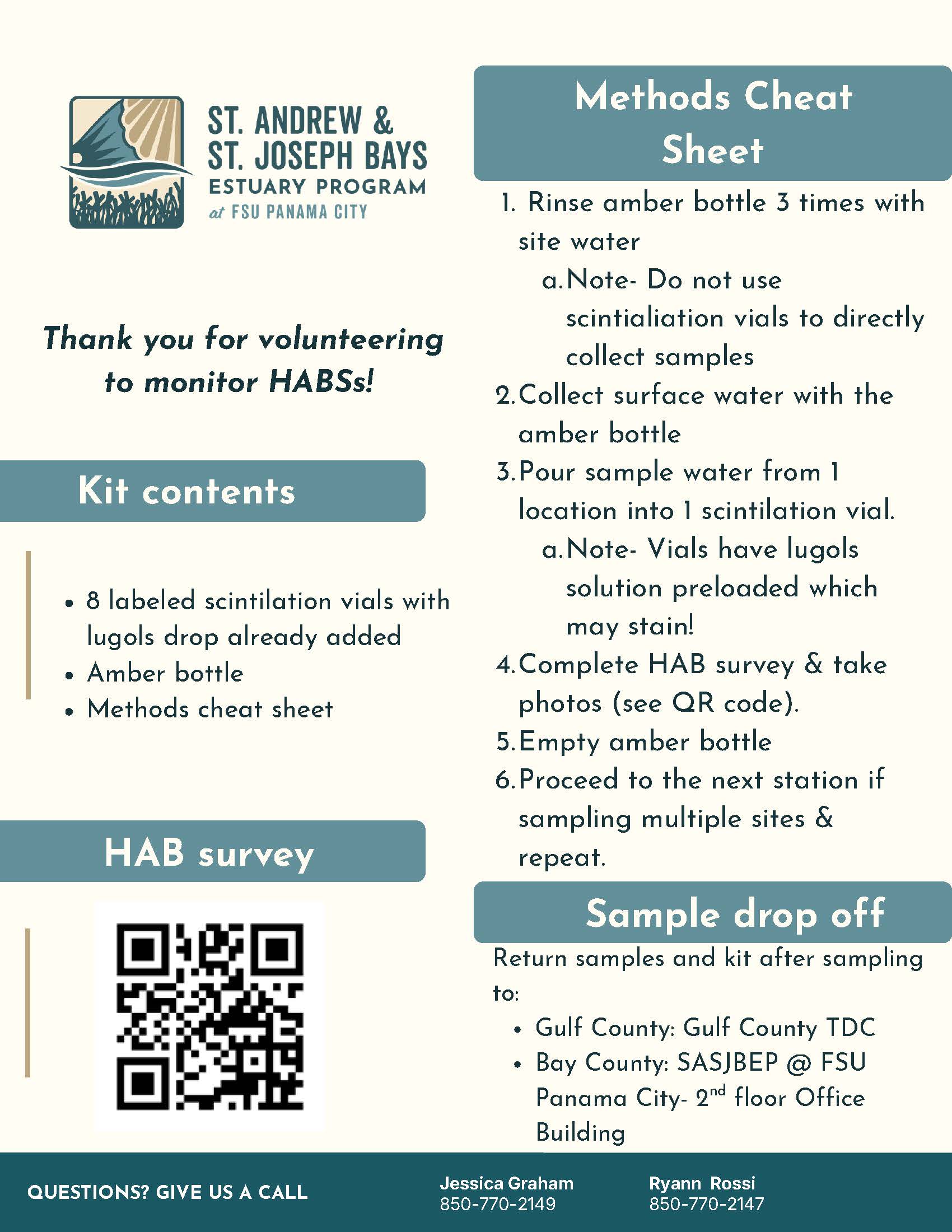
Learn how to collect water samples and fill out online surveys documenting your sample.
Flexible sampling
Collect samples when it’s convenient for you, whether daily, weekly, or monthly.
Accessible collection sites
Samples can be collected from a boat, on shore, or from a dock.
Convenient Pick-up and Drop-off locations
Kits pickup and drop off points located at:
- Gulf County Welcome Center, Port St. Joe
- Point South Marina, Port St. Joe
- FSU Panama City
Interested in becoming a HAB Network volunteer?
By volunteering your time, you can help expand our monitoring efforts, improve our understanding of HAB activity, and contribute to the protection of our bays and coastal ecosystems.
Sign up for our email list to learn more and be notified of upcoming training opportunities.